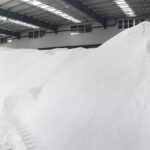
Why Solar Glass Plants Insist on Quartz with <50 ppm Iron
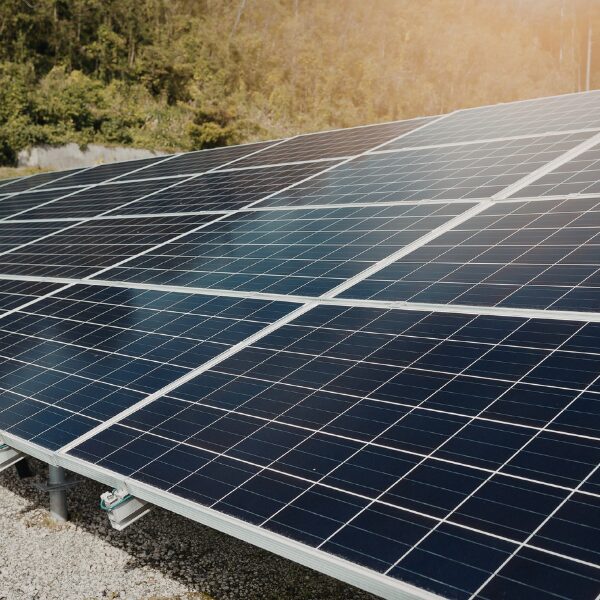
As the global solar industry pushes toward higher efficiency and cleaner aesthetics, one raw material has become increasingly critical behind the scenes: ultra-low-iron quartz.
For solar glass manufacturers, iron contamination is no longer a minor quality parameter — it is a defining specification. Today, many solar glass plants demand quartz with Fe₂O₃ levels below 50 ppm, while advanced production lines are tightening requirements even further, targeting below 30 ppm.
Why? Because in solar glass manufacturing, even trace amounts of iron can directly impact light transmission, panel performance, and long-term durability.
The Iron Problem in Solar Glass
Solar panels are designed to absorb as much sunlight as possible. The glass covering the photovoltaic cells must therefore allow maximum light transmission with minimal optical distortion.
Iron impurities in quartz introduce unwanted coloration and reduce transparency. Even small concentrations of Fe₂O₃ can create a noticeable green tint in glass and limit the amount of solar radiation reaching the cells beneath.
For manufacturers striving to improve module efficiency by even fractions of a percent, reducing iron content becomes essential.
This is why ultra-low-iron quartz has become a strategic raw material for modern solar glass production.
What Sub-50 ppm Quartz Unlocks
Higher Light Transmission
Low-iron quartz enables the production of ultra-clear solar glass with superior light transmission properties. More sunlight passing through the glass means more energy reaching the photovoltaic cells.
The result is improved panel efficiency — a major competitive advantage for module manufacturers operating in a high-performance market.
Cleaner Glass Appearance
Architectural solar applications such as Building-Integrated Photovoltaics (BIPV) demand both performance and visual appeal. High iron levels create greenish glass tones that can compromise premium architectural aesthetics.
Quartz with Fe₂O₃ below 50 ppm helps manufacturers produce cleaner, more neutral glass colours suitable for premium solar installations and modern building facades.
Reduced Solarization Over Time
Solar glass is exposed to years of UV radiation and environmental stress. Impurities can contribute to solarization effects that gradually reduce optical clarity.
Using ultra-low-iron quartz supports long-term transparency stability, helping maintain panel efficiency throughout the operational life of the module.
Compliance with Tier-1 Manufacturer Standards
Tier-1 solar module manufacturers maintain extremely strict raw material specifications to ensure consistency, durability, and export compliance.
As global quality benchmarks rise, low-iron quartz is increasingly becoming a mandatory requirement rather than a premium option.
India’s Solar Manufacturing Boom is Driving Demand
India’s aggressive solar manufacturing expansion is accelerating demand for high-purity quartz.
Government initiatives such as the Production Linked Incentive (PLI) scheme and Approved List of Models and Manufacturers (ALMM) are encouraging large-scale domestic manufacturing of solar modules, cells, and glass.
This manufacturing push has elevated ultra-low-iron quartz into one of the country’s most strategically important industrial minerals.
As more solar glass plants come online, the industry requires stable, scalable, and highly consistent sources of beneficiated quartz capable of meeting stringent Fe₂O₃ specifications batch after batch.
The Challenge of Achieving Ultra-Low Iron Levels
Producing quartz below 50 ppm Fe₂O₃ is not simply about mining high-grade deposits. It requires sophisticated beneficiation and quality-control processes.
Key factors include:
- Careful ore selection and characterization
- Advanced crushing and grinding systems
- Magnetic separation and impurity removal
- Controlled washing and classification
- Rigorous batch testing and consistency monitoring
Even slight contamination during handling or processing can push iron levels above acceptable limits.
This is why reliable supply partners with proven beneficiation capabilities are becoming essential to the solar glass value chain.
Gimpex Pvt Ltd: Supporting India’s Solar Glass Industry
Gimpex Pvt Ltd is committed to supporting the evolving requirements of India’s renewable energy manufacturing ecosystem.
With advanced mineral processing expertise and a strong focus on quality consistency, Gimpex Pvt Ltd supplies ultra-low-iron quartz beneficiated to solar-glass specifications.
By delivering cleaner quartz with controlled Fe₂O₃ levels, Gimpex helps solar glass manufacturers achieve:
- Better optical performance
- Higher panel efficiency
- Improved glass clarity
- Reliable production consistency
- Compliance with demanding global standards
As India strengthens its position in global solar manufacturing, high-purity quartz will continue to play a critical role in enabling brighter, more efficient solar panels.
Cleaner quartz. Brighter panels.
Latest Posts
- 2026 GBFS Market: New Price Benchmarks Signal a More Mature Global Trade
- India’s Steel Production Growth and What It Means for Iron Ore Demand
- Limestone: Supporting India’s Growing Cement and Infrastructure Sector

- Mill Scale: Turning Steelmaking By-Products into Valuable Industrial Resources
- India’s Quartz Processing Sector: Growing Demand, Applications and Opportunities