Latest Industrial Applications Expanding Limestone Demand
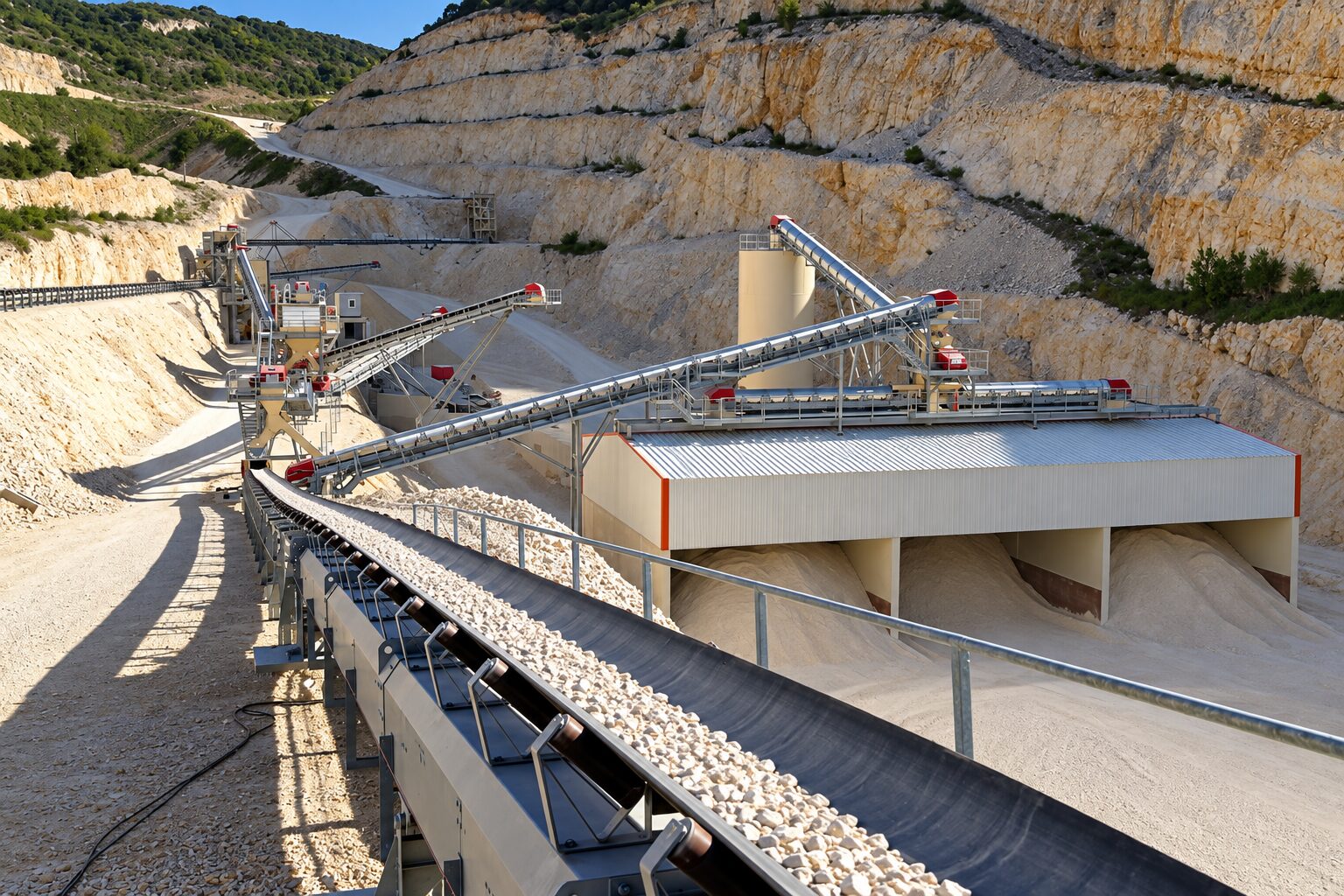
Limestone continues to be one of the most widely used industrial minerals, supporting a broad range of manufacturing and infrastructure activities. Its chemical composition, availability, and versatility make it an important raw material for industries such as steel, cement, construction, glass, chemicals, and environmental control.
As industrial production expands and manufacturers focus on efficiency, quality, and environmental performance, the demand for suitable grades of limestone continues to develop. Different industries require limestone with specific chemical properties, particle sizes, and purity levels to meet their processing requirements.
For industrial buyers, reliable sourcing and consistent quality are therefore essential for maintaining smooth production. Gimpex Pvt Ltd supports industrial requirements by providing dependable mineral sourcing and supply solutions.
Limestone in the Steel Industry
The steel industry is one of the major consumers of limestone. During steelmaking, limestone is primarily used as a fluxing material. When heated, limestone decomposes to form lime, which reacts with impurities present in the iron and steelmaking process.
This helps form slag, allowing unwanted materials to be separated from the molten metal. The effectiveness of limestone in this application depends on factors such as calcium carbonate content, particle size, and impurity levels.
As steel production continues to support infrastructure, automotive, machinery, and manufacturing sectors, the requirement for suitable flux-grade limestone remains an important industrial demand driver.
Growing Role of Limestone in Cement Manufacturing
Cement manufacturing is another major application of limestone. Limestone provides the primary source of calcium required for producing clinker, which is subsequently processed to manufacture cement.
During cement production, limestone is combined with other raw materials and heated at high temperatures in a kiln. The resulting clinker is ground with suitable additives to produce cement.
The quality and chemical composition of limestone can influence the efficiency and consistency of the manufacturing process. As construction and infrastructure projects continue to generate demand for cement, limestone remains an essential raw material for the industry.
Limestone for Flue Gas Desulfurization
Environmental applications are also contributing to the industrial importance of limestone. Limestone is widely used in flue gas desulfurization (FGD) systems to help control sulfur dioxide emissions from certain industrial processes, particularly in power generation.
In wet FGD systems, finely processed limestone can react with sulfur dioxide in flue gas and help convert it into calcium-based compounds. This makes limestone an important material for emission-control processes.
For FGD applications, factors such as calcium carbonate content, particle size, reactivity, and impurity levels can be important when selecting suitable material.
Limestone in Glass and Chemical Manufacturing
Limestone also supports several applications within the glass and chemical industries. Its calcium content makes it useful as a source of calcium compounds in various manufacturing processes.
In glass production, limestone can be used as a source of calcium oxide. Calcium oxide contributes to the chemical stability and durability of certain types of glass.
The chemical industry also uses limestone and lime-derived products in different processes, including neutralization and the production of calcium-based compounds. These applications create demand for limestone with consistent chemical characteristics.
Construction and Infrastructure Applications
Construction is another significant area where limestone plays an important role. Crushed limestone can be used as aggregate, road base material, and in various building and infrastructure applications.
Its strength, availability, and versatility make limestone suitable for applications ranging from roads and foundations to concrete-related materials and other construction products.
Continued investment in infrastructure, urban development, transportation projects, and industrial construction supports ongoing demand for construction-grade limestone.
What Is Driving Limestone Demand?
The growing use of limestone across multiple industries is supported by several industrial trends. Expansion in steel production increases the requirement for flux materials, while cement demand is closely connected to construction and infrastructure development.
At the same time, environmental regulations and emission-control requirements support the use of limestone in FGD applications. Chemical and glass manufacturing further broaden the range of industrial applications.
This diversified demand makes limestone an important mineral for several interconnected sectors.
Importance of Consistent Limestone Supply
Industrial manufacturers require more than just access to limestone. They need material that meets application-specific requirements and can be supplied consistently according to production schedules.
Important factors can include chemical composition, calcium carbonate content, particle size distribution, moisture, impurity levels, packaging, and delivery requirements. Consistency in these parameters can help manufacturers maintain predictable production processes.
Reliable sourcing networks and supply-chain coordination therefore play an important role in supporting industrial mineral procurement.
Gimpex Pvt Ltd: Supporting Industrial Mineral Requirements
At Gimpex Pvt Ltd, we understand the importance of dependable mineral sourcing for industrial applications. Our approach focuses on supporting customers with reliable supply solutions and mineral products suited to diverse industrial requirements.
From steel and cement to environmental applications, construction, glass, and chemicals, limestone continues to serve as an important industrial mineral.
As industries evolve and manufacturing requirements become increasingly application-specific, consistent quality and dependable supply remain essential. Gimpex Pvt Ltd continues to support industrial buyers with sourcing and supply solutions designed around their operational requirements.
Conclusion
Limestone remains a fundamental industrial mineral with applications extending across steel, cement, FGD, glass, chemicals, and construction. Its versatility and role in essential manufacturing processes continue to support demand across multiple sectors.
As industrial production and infrastructure activities develop, the need for suitable limestone grades, consistent quality, and reliable supply is expected to remain important. For manufacturers and industrial buyers, working with dependable mineral supply partners can help support efficient and uninterrupted operations.
Latest Posts
- 2026 GBFS Market: New Price Benchmarks Signal a More Mature Global Trade

- India’s Steel Production Growth and What It Means for Iron Ore Demand

- Limestone: Supporting India’s Growing Cement and Infrastructure Sector
- Mill Scale: Turning Steelmaking By-Products into Valuable Industrial Resources
- India’s Quartz Processing Sector: Growing Demand, Applications and Opportunities