India's 300 MT Steel Ambition — The Limestone Story Behind It
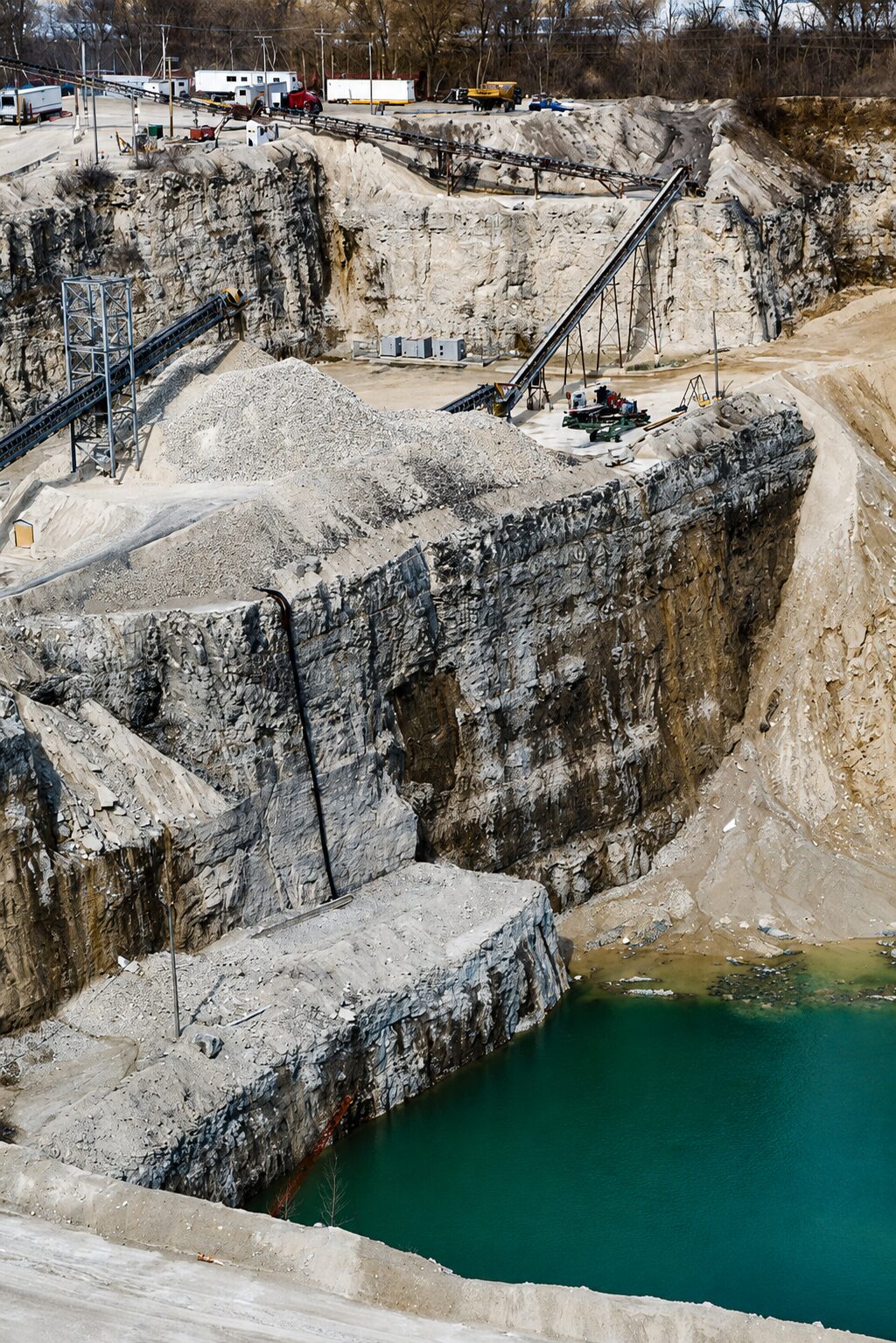
India is on the cusp of a historic industrial transformation. With the government aiming to increase the country’s steel production capacity to 300 million tonnes (MT) by 2030, the steel industry is preparing for unprecedented expansion in mining, infrastructure, manufacturing, and raw material sourcing.
While much of the conversation revolves around blast furnaces, electric arc furnaces, and advanced steel technologies, one critical ingredient often remains overlooked—limestone.
This naturally occurring mineral plays a vital role in steelmaking, influencing productivity, metal quality, furnace efficiency, and operating costs. As India’s steel sector scales toward its ambitious 300 MT target, the demand for high-quality steel-grade limestone will become more important than ever.
Why Limestone Matters in Steel Manufacturing
Steel production depends on precise control of chemistry inside the furnace. During the smelting process, impurities such as silica, alumina, sulfur, and phosphorus must be removed efficiently to produce high-quality steel.
This is where limestone serves as an essential fluxing agent.
When heated, limestone decomposes into lime (CaO), which reacts with impurities to form slag. The slag separates unwanted materials from molten iron, ensuring cleaner metal production and protecting furnace linings from excessive wear.
Without consistent limestone quality, steel plants face reduced yields, higher slag volumes, increased fuel consumption, and inconsistent production performance.
Purity Directly Impacts Steel Economics
Even minor improvements in limestone chemistry can create significant economic advantages for integrated steel plants.
A 0.5% increase in CaCO₃ purity may appear small on paper, but at large production volumes it can substantially improve slag chemistry, reduce waste generation, optimize flux consumption, and increase overall process efficiency.
Higher purity limestone also minimizes unwanted gangue minerals, reducing energy consumption and improving furnace productivity. These incremental gains become increasingly valuable as plants scale toward multi-million-ton annual capacities.
For an industry operating on tight margins, raw material consistency directly translates into operational profitability.
Particle Size Matters More Than Many Realize
Steel-grade limestone is not simply about chemical composition—it is equally about particle sizing.
Modern blast furnaces and sinter plants require limestone with controlled size distribution to ensure uniform charging, predictable decomposition, and efficient reaction kinetics.
Improper sizing can lead to:
- Irregular furnace burden distribution
- Reduced permeability
- Inconsistent slag formation
- Increased fuel requirements
- Lower productivity
Maintaining consistent particle size improves furnace stability and enhances overall process control, making sizing an equally important quality parameter alongside purity.
Supporting India’s Next Generation of Steel Plants
As India accelerates investments in infrastructure, railways, automobiles, renewable energy, and construction, steel demand will continue to rise significantly.
Meeting the 300 MT target requires more than expanding furnace capacity—it demands dependable raw material supply chains that deliver consistent quality year after year.
Limestone suppliers must meet increasingly stringent requirements for:
- High calcium carbonate (CaCO₃) purity
- Controlled chemical composition
- Uniform particle sizing
- Reliable large-volume supply
- Consistent quality across shipments
These parameters ensure uninterrupted operations and maximize steel plant efficiency.
Gimpex Pvt. Ltd.: Delivering Steel-Grade Limestone for India’s Growth
At Gimpex Pvt. Ltd., we understand that raw material consistency is the foundation of efficient steel production.
Our steel-grade limestone is sourced and processed to meet the demanding specifications of modern steel plants, offering reliable chemistry, controlled sizing, and dependable supply capabilities for large-scale industrial operations.
As India moves toward becoming one of the world’s largest steel producers, success will increasingly depend on disciplined raw material management. High-quality limestone will remain a critical enabler of cleaner production, higher yields, and sustainable operational performance.
Final Thoughts
India’s journey to 300 MT steel capacity by 2030 represents one of the country’s most significant industrial milestones. While advanced technologies and capacity expansion will drive growth, the industry’s long-term success will also depend on foundational raw materials that support every stage of steelmaking.
Limestone may not always be in the spotlight, but its role is indispensable. From impurity removal and slag formation to furnace efficiency and production economics, quality limestone helps shape the future of Indian steel.
At Gimpex Pvt. Ltd., we are committed to supplying steel-grade limestone with the consistency, chemistry, and sizing required for tomorrow’s high-performance steel industry—because the next decade of Indian steel will be built on raw material excellence.
Latest Posts
- 2026 GBFS Market: New Price Benchmarks Signal a More Mature Global Trade
- India’s Steel Production Growth and What It Means for Iron Ore Demand
- Limestone: Supporting India’s Growing Cement and Infrastructure Sector
- Mill Scale: Turning Steelmaking By-Products into Valuable Industrial Resources
- India’s Quartz Processing Sector: Growing Demand, Applications and Opportunities