
How Cenospheres Are Transforming High-Performance Industrial Products
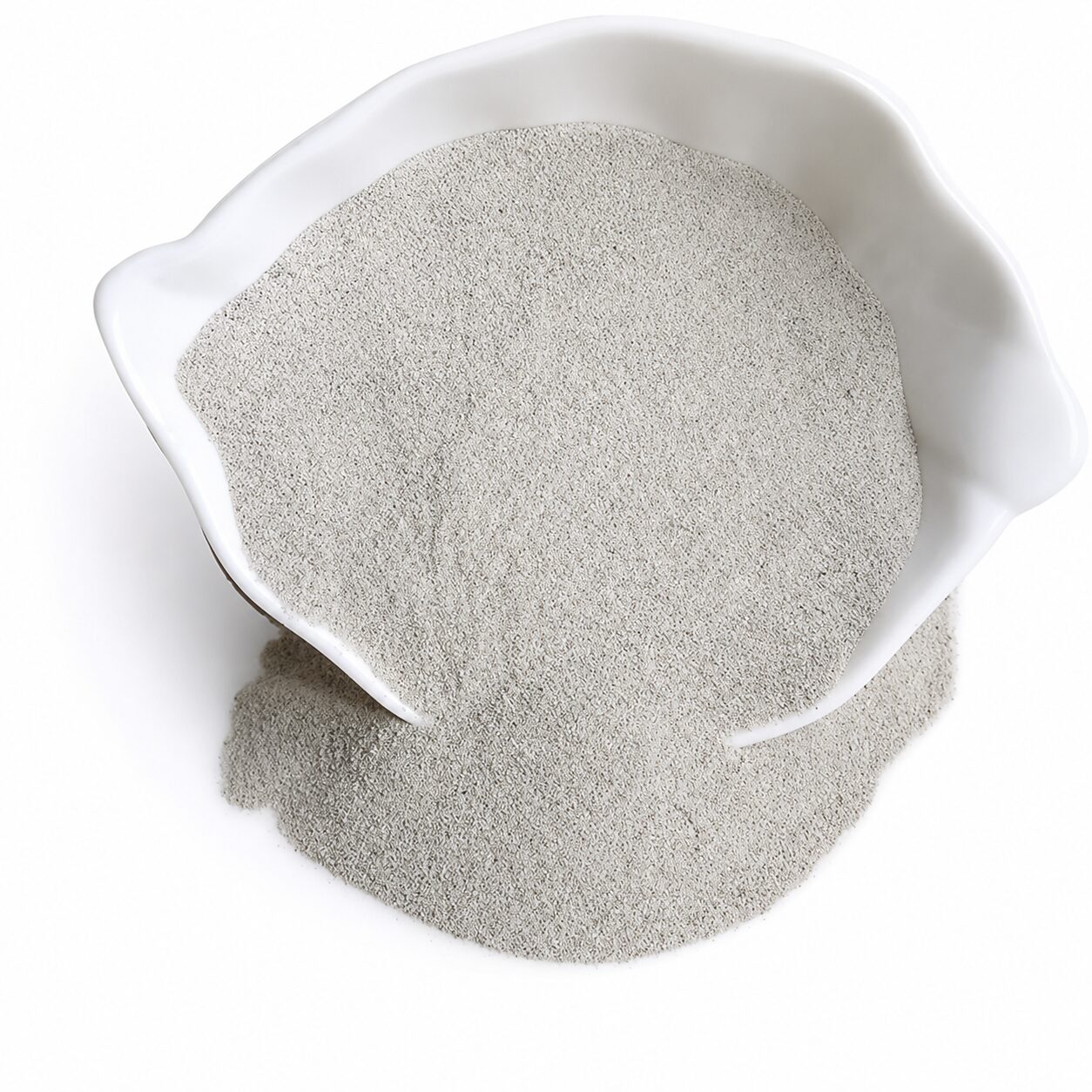
Modern industries are continuously looking for materials that can improve product performance while reducing weight, increasing durability, and supporting more efficient manufacturing. As manufacturers move toward advanced and sustainable material solutions, cenospheres are gaining attention as a versatile industrial mineral with a wide range of applications.
Cenospheres are lightweight, hollow, spherical particles primarily recovered from fly ash generated during coal combustion. Their unique combination of low density, thermal resistance, chemical stability, and mechanical strength makes them valuable for developing high-performance products across multiple industries.
From construction materials and protective coatings to plastics, ceramics, and automotive components, cenospheres are helping manufacturers achieve better performance without unnecessarily increasing material weight.
What Makes Cenospheres a High-Performance Material?
The structure of cenospheres is one of the main reasons behind their growing industrial importance. These tiny, hollow spheres have a low bulk density while maintaining useful strength and durability.
Their lightweight nature allows manufacturers to reduce the overall weight of finished products. At the same time, their thermal and chemical properties can help improve the performance and service life of materials exposed to demanding operating conditions.
Cenospheres can also be incorporated into different material systems, making them adaptable to applications where weight reduction, insulation, durability, and material efficiency are important.
Lightweight Products Without Compromising Performance
One of the biggest advantages of cenospheres is their ability to reduce material density. Manufacturers can use cenospheres as fillers in selected formulations to create lighter products while maintaining desirable mechanical and functional properties.
This is particularly useful in industries where reducing weight can improve transportation efficiency, handling, installation, or overall product performance.
In construction, lightweight concrete and other cementitious materials can benefit from lightweight fillers. In plastics and composites, cenospheres can help reduce density and improve the efficiency of the finished material.
This combination of lightweight and durability makes cenospheres an attractive option for modern product development.
Improving Thermal Resistance and Insulation
Cenospheres also offer useful thermal properties. Their hollow structure can contribute to thermal insulation when incorporated into suitable material systems.
This makes them valuable in applications where products need to withstand heat or reduce heat transfer. Construction materials, refractory products, coatings, ceramics, and insulation-related applications can benefit from materials engineered with cenospheres.
For manufacturers, incorporating cenospheres into the right formulation can support the development of products designed for challenging temperature conditions while maintaining a relatively low weight.
Enhancing Construction Materials
The construction sector is one of the important areas where cenospheres can contribute to material innovation. Their low density makes them suitable for lightweight concrete, cement-based products, fillers, and other construction formulations.
Using lightweight materials can help reduce structural loads and make transportation and handling more efficient. Cenospheres can also contribute to improved thermal insulation and material performance depending on the formulation and application.
As the construction industry increasingly focuses on energy efficiency, resource optimization, and high-performance building materials, cenospheres can play a valuable role in developing advanced construction solutions.
Applications in Coatings and Protective Materials
Cenospheres can also be used in specialized coatings and protective material formulations. Their spherical shape and low density make them useful as functional fillers in selected coating systems.
Depending on the formulation, cenospheres can help improve properties such as thermal resistance, dimensional stability, and overall material efficiency.
Industrial coatings used in demanding environments often require a balance of durability, protection, and performance. Cenospheres can support manufacturers in developing formulations that meet these requirements while helping control material density.
Supporting Innovation in Plastics and Composites
The plastics and composites industries are constantly seeking ways to improve performance while reducing weight and material consumption. Cenospheres can serve as lightweight fillers in suitable polymer systems.
When properly incorporated, they can help lower the density of composite materials and potentially improve dimensional stability and selected mechanical or thermal properties.
This makes cenospheres relevant to applications where manufacturers need lightweight components with functional performance. Their versatility allows them to be considered for different polymer and composite formulations based on specific product requirements.
Expanding Possibilities in Ceramics
Cenospheres can also contribute to ceramic formulations and other high-temperature material applications. Their thermal resistance and lightweight structure make them interesting for manufacturers developing specialized ceramic products.
In carefully designed formulations, cenospheres can influence density, thermal characteristics, and processing behavior. This creates opportunities for producing materials that are lighter while still meeting application-specific performance requirements.
As advanced ceramics continue to find applications across industrial sectors, lightweight mineral fillers such as cenospheres can contribute to ongoing material innovation.
Automotive Applications and Lightweight Engineering
The automotive industry places significant importance on weight reduction because lighter components can contribute to improved efficiency and performance. Cenospheres can support this objective when used as fillers in selected plastics, composites, coatings, and other engineered materials.
Lightweight components can be particularly valuable in applications where manufacturers are balancing strength, durability, thermal performance, and weight.
As automotive manufacturers increasingly explore advanced materials for conventional, hybrid, and electric vehicles, the demand for lightweight and efficient material solutions is expected to remain important.
Improving Material Efficiency
Another major advantage of cenospheres is their potential to improve material efficiency. Instead of relying entirely on dense conventional fillers, manufacturers can evaluate lightweight cenospheres as part of a carefully optimized formulation.
Their hollow structure means a relatively small amount of mass can occupy useful volume. This can help manufacturers develop lower-density products while maintaining the required functional characteristics.
However, performance depends on factors such as cenosphere grade, particle size, chemical composition, surface characteristics, loading level, and compatibility with the surrounding material. Selecting the right quality and specification is therefore essential.
A Versatile Solution Across Industries
The versatility of cenospheres is one of the key reasons behind their growing adoption. They can be evaluated for applications across construction, coatings, plastics, composites, ceramics, automotive products, insulation materials, and other industrial systems.
Their combination of low density, thermal resistance, chemical stability, durability, and spherical morphology gives manufacturers flexibility when developing advanced material formulations.
Rather than serving as a simple filler, cenospheres can become a functional component of product design when the material is selected and processed according to the application’s technical requirements.
Supporting Sustainable Material Development
Cenospheres are also associated with resource recovery because they are obtained from fly ash, a by-product of coal combustion. Utilizing suitable recovered materials in industrial applications can support resource efficiency and reduce dependence on some conventional raw materials.
For manufacturers pursuing more sustainable production strategies, cenospheres can therefore offer an opportunity to combine performance objectives with improved utilization of industrial by-products.
The sustainability benefits depend on responsible sourcing, processing, transportation, and application. Nevertheless, their potential contribution to circular material use makes cenospheres increasingly relevant to modern industrial manufacturing.
Choosing the Right Cenosphere Supplier
The quality and consistency of cenospheres can have a significant impact on the performance of the final product. Manufacturers should consider factors such as particle size distribution, density, chemical composition, moisture content, strength, and application suitability when selecting a supplier.
Reliable sourcing is particularly important for industrial manufacturers operating at scale. Consistent material quality helps support stable production processes and predictable product performance.
A supplier with experience in industrial minerals can help buyers identify suitable grades according to their application requirements and quality specifications.
Gimpex Pvt. Ltd. – Supporting Modern Industrial Material Needs
At Gimpex Pvt. Ltd., we understand the importance of quality, consistency, and dependable sourcing in modern manufacturing. Our focus on industrial minerals enables businesses to access material solutions suited to diverse industrial requirements.
Cenospheres represent an important example of how innovative mineral materials can help industries develop products that are lighter, more efficient, durable, and performance-oriented.
As manufacturers continue to pursue advanced materials and sustainable production approaches, cenospheres are positioned to play an increasingly important role across a wide range of industrial applications.
Conclusion
Cenospheres are transforming the development of high-performance industrial products by offering a unique combination of lightweight structure, thermal resistance, durability, chemical stability, and versatility.
From lightweight construction materials and protective coatings to plastics, composites, ceramics, and automotive applications, they provide manufacturers with opportunities to optimize product performance and material efficiency.
As industries continue to demand lighter, stronger, and more sustainable solutions, cenospheres are becoming an increasingly valuable component in advanced material development. With reliable sourcing and the right grade for each application, manufacturers can unlock the full potential of this versatile industrial mineral.
Latest Posts
- 2026 GBFS Market: New Price Benchmarks Signal a More Mature Global Trade

- India’s Steel Production Growth and What It Means for Iron Ore Demand

- Limestone: Supporting India’s Growing Cement and Infrastructure Sector

- Mill Scale: Turning Steelmaking By-Products into Valuable Industrial Resources

- India’s Quartz Processing Sector: Growing Demand, Applications and Opportunities